
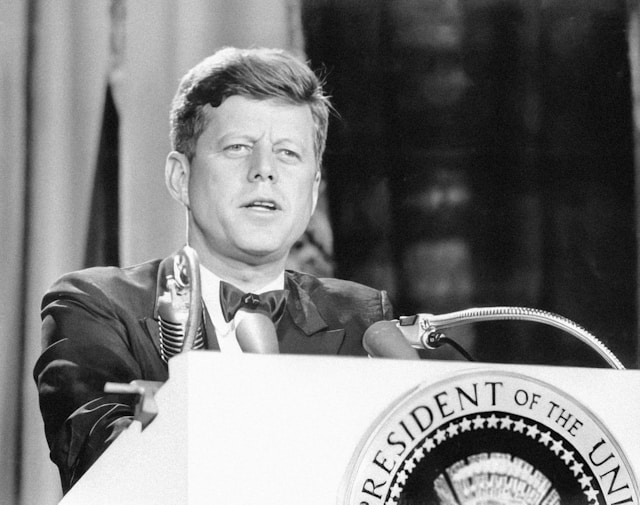
There are films that present history, and then there are films that wrestle with it, pinning it to the mat and demanding answers. Oliver Stone’s JFK is firmly in the latter category. Watching it isn’t a passive experience; it’s a three-hour cinematic whirlwind, a furious montage of evidence, speculation, archival footage, and recreated memories that leaves you breathless.
Of all the historical-based movies, JFK remains one of my absolute favorites. It’s a film that doesn’t just tell a story; it makes an argument. It’s a passionate, paranoid, and technically brilliant piece of filmmaking that I believe is more about a nation’s soul than one man’s death.
Kevin Costner’s Powerful Performance as Jim Garrison
At the center of this storm is New Orleans District Attorney Jim Garrison, and I think Kevin Costner gives one of the best performances of his career. At the height of his movie-star charisma, he plays Garrison not as a flawless hero, but as a deeply patriotic man whose faith in his country is shattered.
The film’s narrative anchor is his journey from establishment figure to obsessive outsider. We follow him down a rabbit hole of shady characters, conflicting testimonies, and classified documents. Costner grounds the film’s sprawling conspiracy theories with a sense of righteous indignation that makes us, the audience, feel like we’re part of his jury.
A Revolutionary Cinematic Style
The real star of JFK is its revolutionary style. Not only is the acting top-notch, but the visuals are also incredible, and it’s no wonder Robert Richardson picked up an Oscar for Best Cinematography in 1992. Working with editors Joe Hutshing and Pietro Scalia, who also won Oscars, Stone and Richardson created a unique cinematic language.
- A fusion of formats: The film seamlessly blends 35mm, 16mm, and 8mm film, mixing pristine color cinematography with grainy, black-and-white recreations.
- History as montage: It masterfully weaves real archival footage, including the haunting Zapruder film, with its own staged scenes, creating a disorienting but immersive sense of fractured memory.
This technique does something remarkable: it puts you inside the mind of an investigator. You are bombarded with information, forced to connect the dots, and question what is real versus what is reconstructed. It mirrors the messy, confusing, and often contradictory nature of historical truth itself.
The Courtroom Showdown: “Back… and to the Left”
The film’s most famous sequence is the courtroom scene where Garrison lays out his case, deconstructing the infamous “magic bullet” theory. Using the Zapruder film, he delivers the immortal line, “back… and to the left.”
This scene is the culmination of the entire movie, where all the frenetic editing and disparate threads of evidence coalesce into a single, powerful argument. Whether you agree with its conclusions or not, it’s a stunning piece of persuasive cinema.
The Movie’s Controversial Legacy
It’s impossible to discuss JFK without acknowledging its controversy. Upon its release, it was heavily criticized for blending undisputed facts with unproven theories and outright speculation.
But for me, the film was never meant to be a documentary. It is a counter-myth. Its purpose is to challenge the official narrative of the Warren Commission Report and to validate the skepticism felt by millions of Americans. It’s a film that argues that the act of questioning is a patriotic duty.
For anyone interested in exploring the primary sources, the National Archives holds the official collection of records related to the assassination.
Why JFK Remains Relevant Today
This film is a prime example of what I explore at the Storytelling Archives. It uses the art of filmmaking to “Remember Film & Kinship” by capturing a moment of collective trauma that broke the heart of a nation.
- The reason it endures : In an age of misinformation and deep-seated distrust in institutions, JFK feels more potent than ever. It’s a powerful statement about the battle over official narratives.
- A technical marvel: The film remains a benchmark for its bold editing and cinematography, influencing countless filmmakers since its release.
JFK is more than a history lesson; it’s a visceral expression of a nation’s lingering wound. It captures the paranoia and pain of a generation that felt its innocence was stolen on that day in Dallas. If you’ve never seen it, prepare yourself for a dizzying, exhilarating, and thought-provoking masterpiece.